Understanding Hunger Hormones: Ghrelin, Leptin and Appetite
Hunger is regulated by hormones, not just willpower. Learn how ghrelin, leptin and appetite signals influence weight loss and eating behaviour.
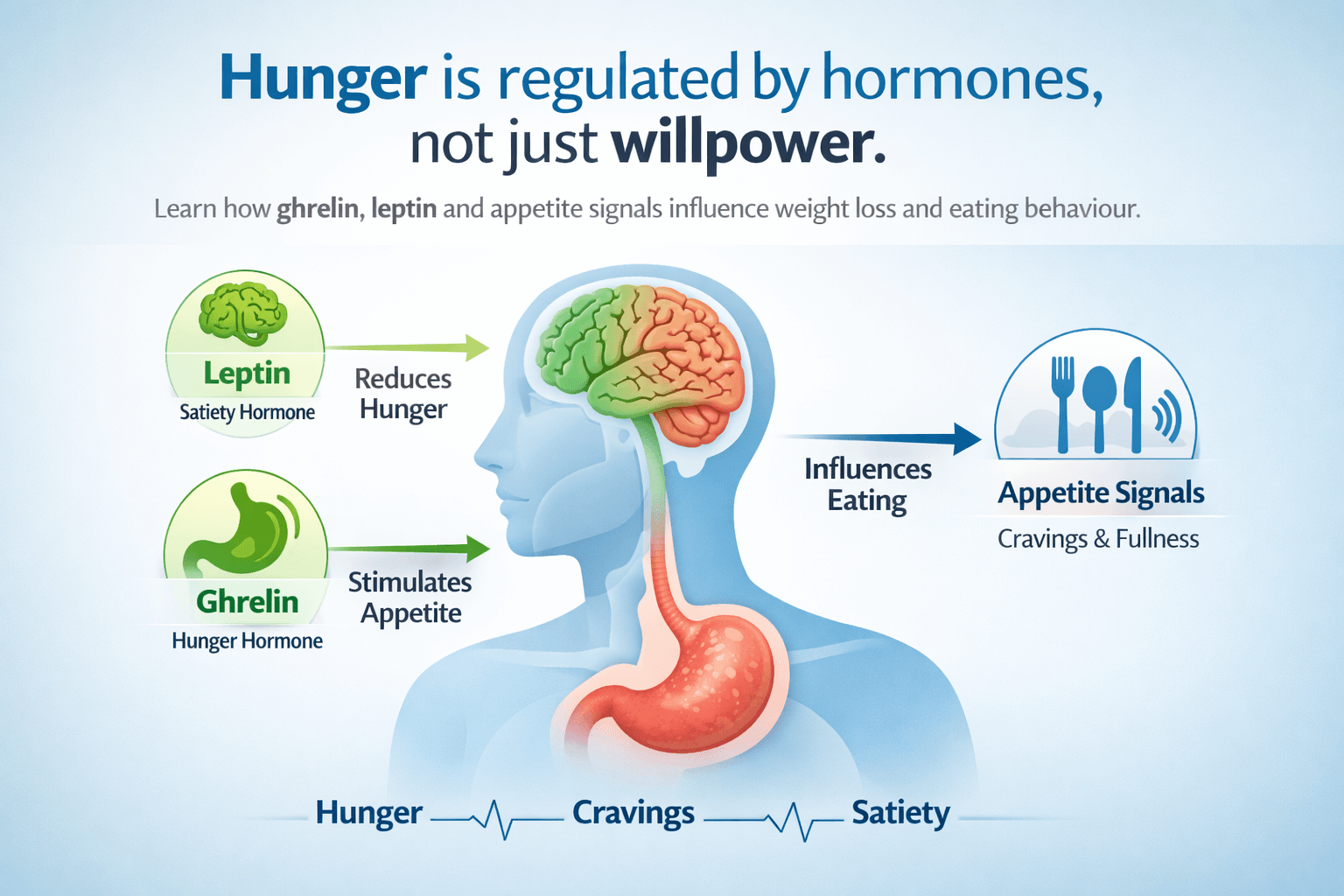
Hunger is often seen as something we should be able to control through willpower. In reality, appetite is largely regulated by complex hormonal systems that influence when we feel hungry, when we feel full, and how our body responds to food.
Understanding these systems can help explain why weight loss is not always straightforward, and why some approaches feel easier to maintain than others. For a broader look at how nutrition influences weight loss, see our article How Nutrition Impacts Weight Loss Beyond Calories.
What controls hunger and fullness
The body uses a range of hormones to regulate appetite. These signals are constantly communicating between the gut, brain, and fat stores to help maintain energy balance.
Two of the most important hormones involved in this process are ghrelin and leptin.
Ghrelin: the hunger hormone
Ghrelin is released primarily in the stomach and signals to the brain that it is time to eat. Levels of ghrelin typically rise before meals and fall after eating.
When food intake is reduced significantly, ghrelin levels can increase, which may lead to stronger feelings of hunger. This is one reason why highly restrictive diets can be difficult to maintain over time.
Leptin: the fullness signal
Leptin is produced by fat cells and helps signal fullness to the brain. It plays a role in regulating long term energy balance and body weight.
In some individuals, particularly those with higher body weight, the body may become less responsive to leptin signals. This can make it harder to feel full, even after eating enough food.
How these hormones affect weight loss
During weight loss, the body often responds by increasing hunger signals and reducing fullness signals. This is a natural biological response designed to protect against weight loss.
This can make long term weight management challenging, even when motivation and effort remain high.
The role of nutrition in appetite regulation
The types of foods you eat can influence how these hormones behave. Meals that are higher in protein and fibre tend to support fullness and help stabilise appetite.
In contrast, meals that are low in protein or high in refined carbohydrates may lead to quicker returns of hunger.
To explore this further, see Protein and Weight Loss: Why It Matters More Than You Think and Fibre and Fullness: The Missing Piece in Most Diets.
Hunger hormones and weight loss medication
Weight loss medications such as Wegovy and Mounjaro work by influencing appetite-related pathways in the body. They help enhance fullness signals and reduce hunger, which can make it easier to manage food intake.
While these medications do not directly replace ghrelin or leptin, they interact with related systems that affect how hunger is experienced. For more detail, see What to Eat on GLP-1 Medications.
Why hunger is not just about discipline
Recognising the role of hormones in appetite can help shift the focus away from self blame. Feeling hungry is not a failure of willpower, but a biological signal.
A supportive approach to weight loss works with these signals rather than trying to ignore them.
Practical ways to support appetite control
There are several ways to support more stable hunger patterns:
• Include protein in each meal
• Increase fibre intake through whole foods
• Maintain regular meal patterns
• Prioritise sleep and stress management
• Avoid long periods of extreme restriction
These strategies can help improve satiety and make eating patterns easier to maintain over time.
How to use this information
Understanding hunger hormones can help you make more informed choices about how you eat. Rather than focusing only on calories, consider how your meals affect fullness, energy, and satisfaction.
For practical guidance, see What a Balanced Plate Looks Like.
Further reading
• NHS Eatwell Guide
• British Dietetic Association resources
• NICE guidance on weight management
Get weekly weight loss tips
Join our newsletter for provider updates, expert guidance, and exclusive offers — no spam.
Subscribe free