Fibre and Fullness: The Missing Piece in Most Diets
Fibre plays a key role in appetite control and weight loss. Learn how it supports fullness, gut health, and how to reach UK fibre recommendations.
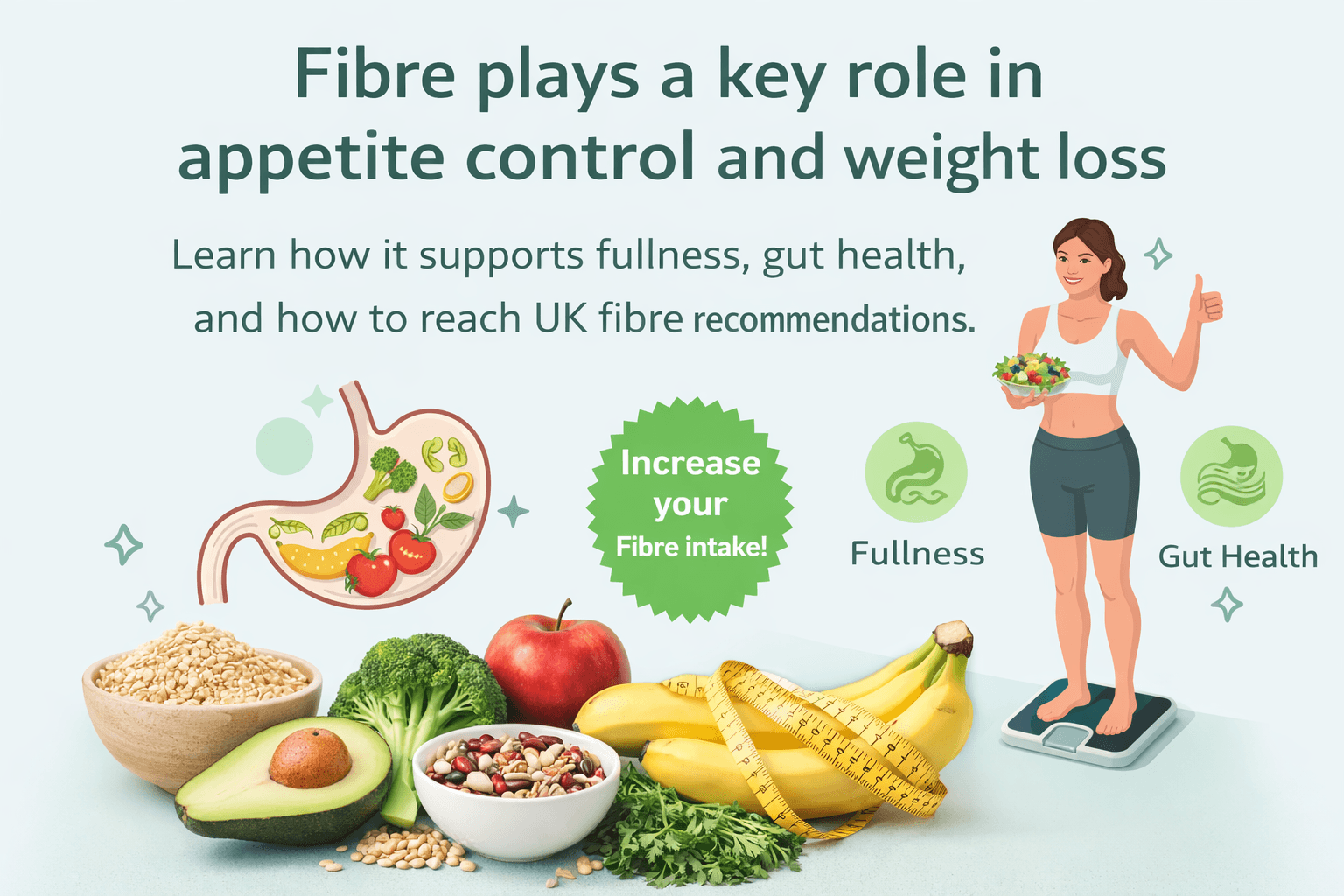
Fibre is one of the most overlooked nutrients in weight loss, yet it plays a central role in helping you feel full, regulate appetite, and support long term health.
Many people focus on calories or protein alone, but without enough fibre, meals may be less satisfying and hunger may return more quickly. For a broader overview, see Nutrition for Sustainable Weight Loss: A UK Clinical Pillar Guide.
What is fibre and why does it matter
Fibre is a type of carbohydrate found in plant-based foods that the body does not fully digest. Instead of being broken down for energy, it moves through the digestive system and supports a range of important functions.
These include appetite regulation, digestive health, and supporting beneficial gut bacteria.
Fibre and fullness
Fibre helps increase fullness in several ways. It slows digestion, adds bulk to meals, and can delay stomach emptying. This means you may feel satisfied for longer after eating.
Meals that are low in fibre are often digested more quickly, which can lead to earlier hunger and increased snacking.
Fibre and appetite control
Fibre also plays a role in stabilising blood sugar levels. Foods that are high in fibre tend to cause a slower rise in blood sugar compared to refined carbohydrates.
This can help reduce energy dips and cravings later in the day. To understand how this fits into appetite regulation, see Understanding Hunger Hormones: Ghrelin, Leptin and Appetite.
How much fibre do you need
According to NHS guidance, adults in the UK should aim for around 30 grams of fibre per day. However, most people consume significantly less than this.
Increasing fibre intake gradually can help avoid digestive discomfort while allowing your body to adjust.
High-fibre foods to include
Fibre is found in a wide range of whole foods:
• Vegetables such as broccoli, carrots, and leafy greens
• Fruits such as apples, berries, and pears
• Whole grains such as oats, brown rice, and wholemeal bread
• Legumes such as lentils, chickpeas, and beans
• Nuts and seeds
Including a variety of these foods can help you reach recommended intake levels more easily.
Fibre and weight loss medications
If you are using medications such as Wegovy or Mounjaro, appetite may be reduced. While this can support weight loss, it may also mean you eat less overall food, including fibre.
Prioritising fibre-rich foods can help maintain digestive health and support fullness, even with smaller meals. For more guidance, see What to Eat on GLP-1 Medications.
Combining fibre with protein
Fibre works particularly well when combined with protein. Together, they create meals that are more satisfying and help regulate appetite more effectively.
For example, pairing lean protein with vegetables and whole grains can help support both fullness and balanced nutrition. To explore protein further, see Protein and Weight Loss: Why It Matters More Than You Think.
Simple ways to increase fibre intake
Small, practical changes can help increase fibre intake:
• Swap refined grains for wholegrain alternatives
• Add vegetables to meals where possible
• Include fruit as part of snacks or breakfast
• Add beans or lentils to meals
• Choose higher-fibre breakfast options such as oats
Common challenges with fibre
Increasing fibre too quickly may cause bloating or discomfort. It can help to increase intake gradually and ensure adequate hydration.
Drinking enough fluids supports fibre as it moves through the digestive system.
How to use this information
If you are trying to improve your nutrition for weight loss, fibre is a key area to focus on. Increasing fibre intake can help you feel fuller, support appetite control, and make your eating pattern easier to maintain.
To build practical meals, see What a Balanced Plate Looks Like and How to Build High-Protein Meals Easily.
Further reading
• NHS Eatwell Guide
• British Dietetic Association fibre guidance
• NICE guidance on weight management
Get weekly weight loss tips
Join our newsletter for provider updates, expert guidance, and exclusive offers — no spam.
Subscribe free