Protein and Weight Loss: Why It Matters More Than You Think
Protein plays a key role in weight loss by supporting fullness, preserving muscle, and reducing cravings. Learn how much you need and how to include it in your diet.
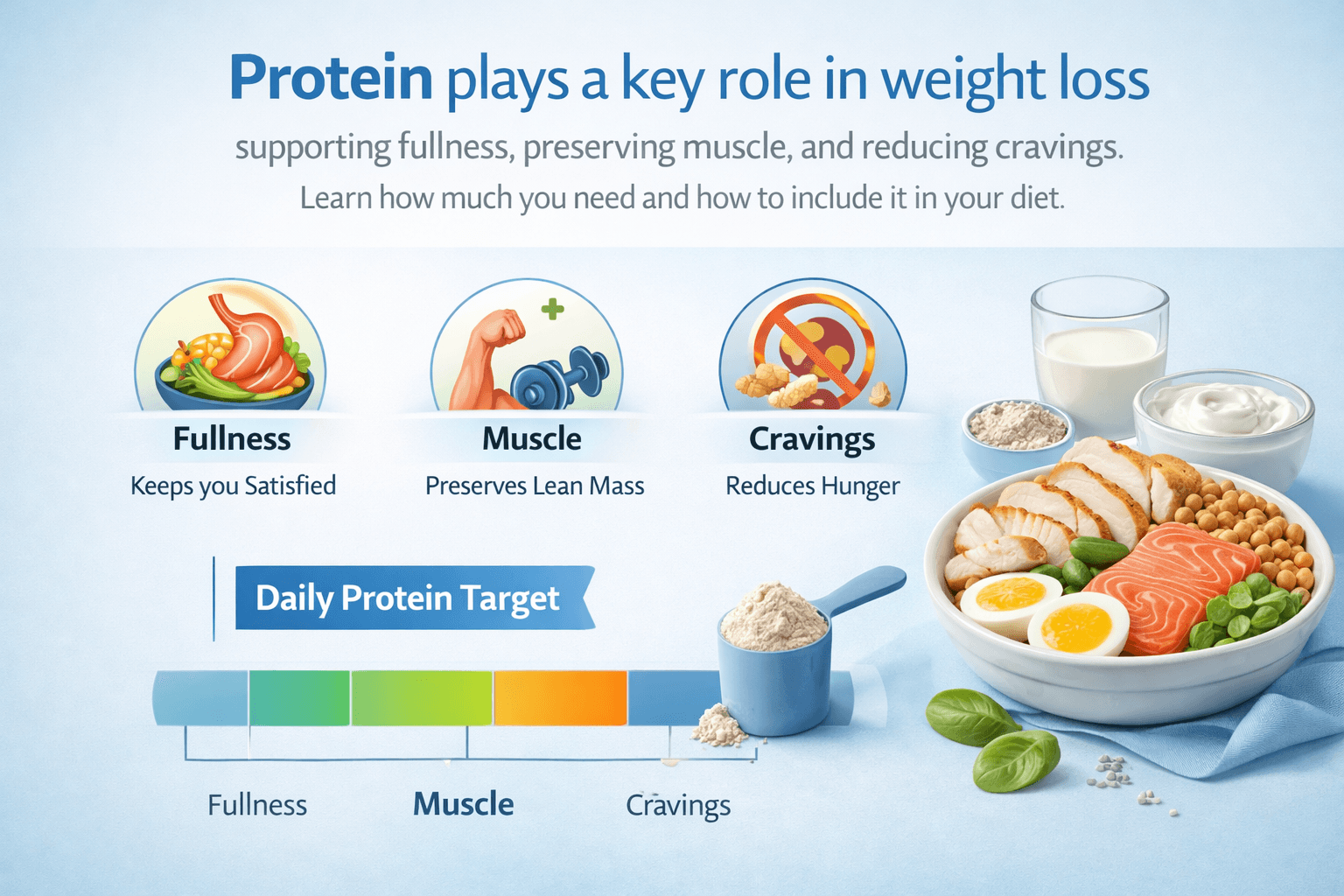
When people think about weight loss, protein is often overlooked in favour of calorie counting. However, protein plays a central role in appetite control, body composition, and long term success.
Including enough protein in your diet can make weight loss feel more manageable by helping you stay full, maintain muscle, and reduce the likelihood of overeating. For a broader overview, see Nutrition for Sustainable Weight Loss: A UK Clinical Pillar Guide.
Why protein is important for weight loss
Protein supports weight loss in several ways. It helps regulate appetite, contributes to fullness after meals, and requires more energy for the body to digest compared to fats and carbohydrates.
This combination can help reduce overall calorie intake without the need for strict restriction.
Protein and satiety
Meals that contain protein tend to be more filling than those that are primarily made up of refined carbohydrates. This can help reduce snacking and support more stable eating patterns.
Protein also interacts with appetite hormones, helping to reduce hunger signals and increase feelings of fullness. To understand this further, see Understanding Hunger Hormones: Ghrelin, Leptin and Appetite.
Preserving muscle during weight loss
When you lose weight, your body may lose both fat and muscle. Maintaining muscle mass is important for overall health, physical function, and metabolic rate.
Adequate protein intake, combined with physical activity where possible, can help reduce muscle loss during weight loss.
This becomes particularly important for individuals using weight loss medications, where reduced appetite may lead to lower overall food intake. For more guidance, see Preventing Muscle Loss While on Weight Loss Medication.
How much protein do you need
Protein needs can vary depending on factors such as body weight, activity levels, and health status. General guidance suggests aiming for a consistent intake across meals rather than consuming most protein in one sitting.
For many people, including a source of protein at each meal is a practical starting point.
Simple ways to increase protein intake
Increasing protein does not need to be complicated. Small changes can make a meaningful difference:
• Add eggs, yoghurt, or protein-rich options to breakfast
• Include lean meats, fish, tofu, or legumes in main meals
• Choose higher-protein snacks such as Greek yoghurt or cottage cheese
• Build meals around a protein source first
For a step-by-step approach, see How to Build High-Protein Meals Easily.
Protein and weight loss medications
Medications such as Wegovy and Mounjaro can reduce appetite significantly. While this can support weight loss, it may also make it easier to under consume protein.
Prioritising protein becomes especially important in this context to help preserve muscle and maintain strength. Smaller, protein-focused meals can be helpful when appetite is reduced. See What to Eat on GLP-1 Medications for more guidance.
Balancing protein with other nutrients
While protein is important, it should be part of a balanced diet that includes fibre, healthy fats, and carbohydrates. This helps support overall nutrition, gut health, and energy levels.
To build balanced meals, see What a Balanced Plate Looks Like and Fibre and Fullness: The Missing Piece in Most Diets.
Common misconceptions about protein
Some people believe that very high protein diets are necessary for weight loss. In reality, consistency and balance are more important than extreme intake levels.
Focusing on including protein regularly throughout the day is usually more effective than aiming for very high amounts in a single meal.
How to use this information
If you are trying to lose weight, start by looking at how much protein you include in your meals. Small adjustments, such as adding a protein source to breakfast or snacks, can help improve fullness and make your eating pattern easier to maintain.
Further reading
• NHS Eatwell Guide
• British Dietetic Association protein guidance
• NICE guidance on weight management
Get weekly weight loss tips
Join our newsletter for provider updates, expert guidance, and exclusive offers — no spam.
Subscribe free