What a Balanced Plate Looks Like (UK Guide)
Learn how to build a balanced plate for weight loss using UK guidance. A simple, practical approach to protein, fibre, and portion balance.
Healthy eating does not need to be complicated. A balanced plate is one of the simplest and most effective ways to support weight loss while maintaining good nutrition.
Rather than focusing on strict rules or tracking every calorie, building balanced meals can help regulate appetite, improve energy levels, and support long term consistency. For a broader overview, see Nutrition for Sustainable Weight Loss: A UK Clinical Pillar Guide.
What is a balanced plate
A balanced plate is a simple way to structure meals so they include the key nutrients your body needs. It is based on principles similar to the NHS Eatwell Guide, adapted to support weight loss and appetite control.
In practice, this means including a mix of protein, fibre-rich foods, and carbohydrates, alongside healthy fats where appropriate.
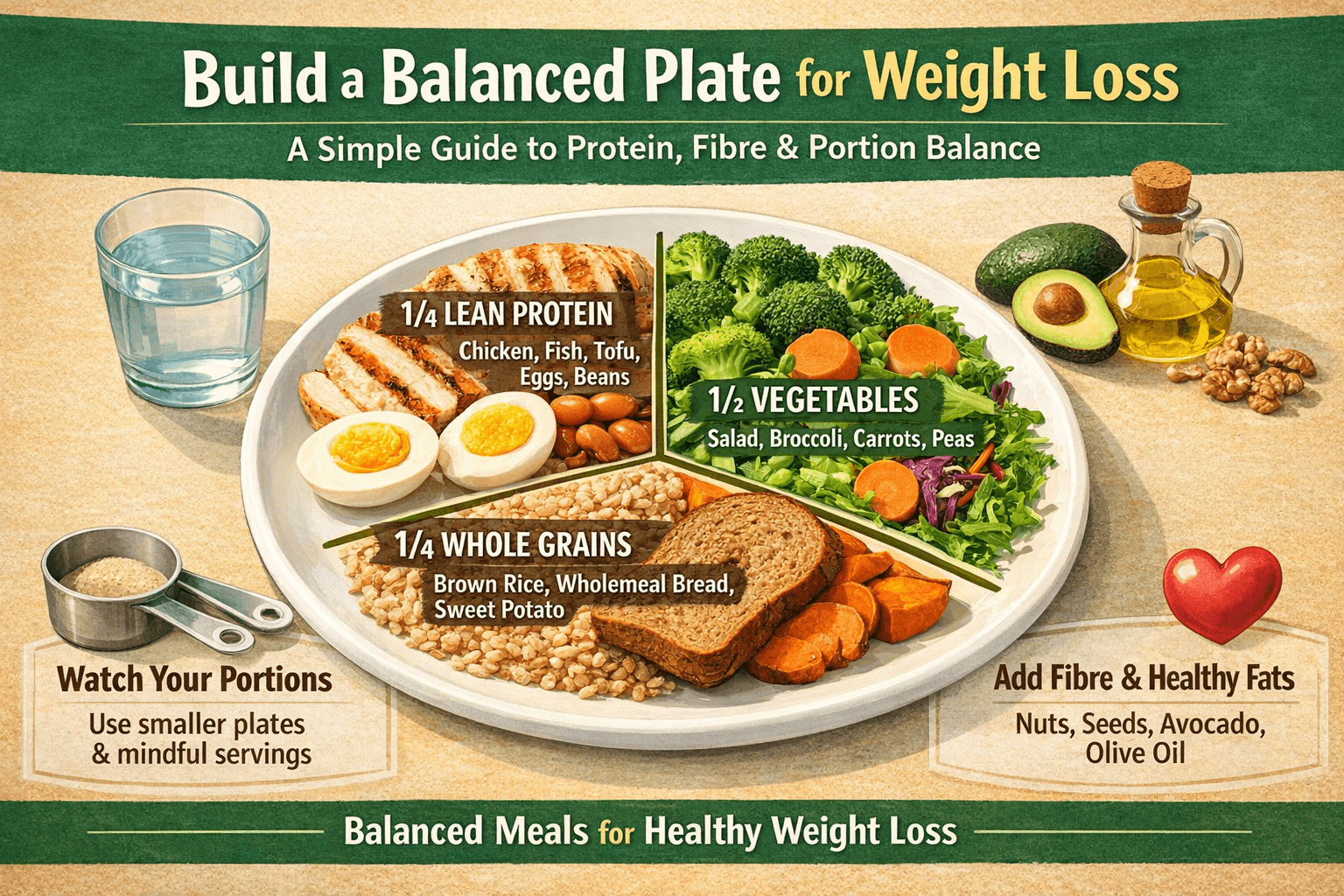
A simple balanced plate model
A practical way to build your plate is:
• Half your plate: vegetables or salad (fibre-rich foods)
• A quarter of your plate: protein (chicken, fish, eggs, tofu, legumes)
• A quarter of your plate: carbohydrates (potatoes, rice, pasta, whole grains)
• A small amount of healthy fats (olive oil, nuts, seeds)
This structure helps support fullness, stable energy, and overall nutrition.
Why this approach supports weight loss
Balanced meals help regulate appetite and reduce the likelihood of overeating. Protein and fibre increase satiety, while carbohydrates provide energy when included in appropriate portions.
This can make weight loss feel more manageable compared to highly restrictive approaches. For more detail, see How Nutrition Impacts Weight Loss Beyond Calories.
Protein as a foundation
Including a source of protein in each meal helps support fullness and maintain muscle during weight loss. This is especially important when eating less overall.
To explore this further, see Protein and Weight Loss: Why It Matters More Than You Think.
Fibre for fullness and gut health
Vegetables, fruits, and whole grains provide fibre, which helps slow digestion and maintain stable blood sugar levels.
This supports appetite control and overall health. For more guidance, see Fibre and Fullness: The Missing Piece in Most Diets.
Carbohydrates are not the problem
Carbohydrates are often reduced or avoided during weight loss, but they can be part of a balanced diet. The key is choosing higher-fibre options and managing portion sizes.
Whole grains and minimally processed carbohydrates can support sustained energy and satisfaction.
Balanced eating on weight loss medication
If you are using medications such as Wegovy or Mounjaro, your appetite may be reduced. This can make it more difficult to eat full meals.
In this situation, focusing on smaller but balanced meals can help ensure you still receive essential nutrients. Prioritising protein and fibre remains important. See What to Eat on GLP-1 Medications for more detail.
Adapting the plate to your needs
There is no single perfect plate for everyone. Portion sizes and food choices may vary depending on your goals, activity levels, and preferences.
Some people may benefit from slightly higher protein intake, while others may adjust carbohydrate portions depending on their lifestyle.
Making balanced meals practical
Balanced eating should work in everyday life. This includes simple meals, convenience foods, and eating out.
Helpful approaches include:
• Building meals around a protein source
• Adding vegetables where possible
• Choosing wholegrain options when available
• Keeping meals simple and repeatable
For more practical guidance, see How to Build High-Protein Meals Easily and Eating Out While Trying to Lose Weight.
How to use this approach
You do not need to apply this model perfectly at every meal. Using it as a general guide can help improve consistency over time without creating pressure or restriction.
Small, repeatable improvements in meal structure can make a meaningful difference to weight loss and long term health.
Further reading
• NHS Eatwell Guide
• British Dietetic Association resources
• NICE guidance on weight management
Get weekly weight loss tips
Join our newsletter for provider updates, expert guidance, and exclusive offers — no spam.
Subscribe free