Weight Loss Medication vs Willpower: Reframing Obesity as a Medical Condition
Weight loss is not just about willpower. This article explains the biology of obesity and why medications like Wegovy and Mounjaro support long term weight management.
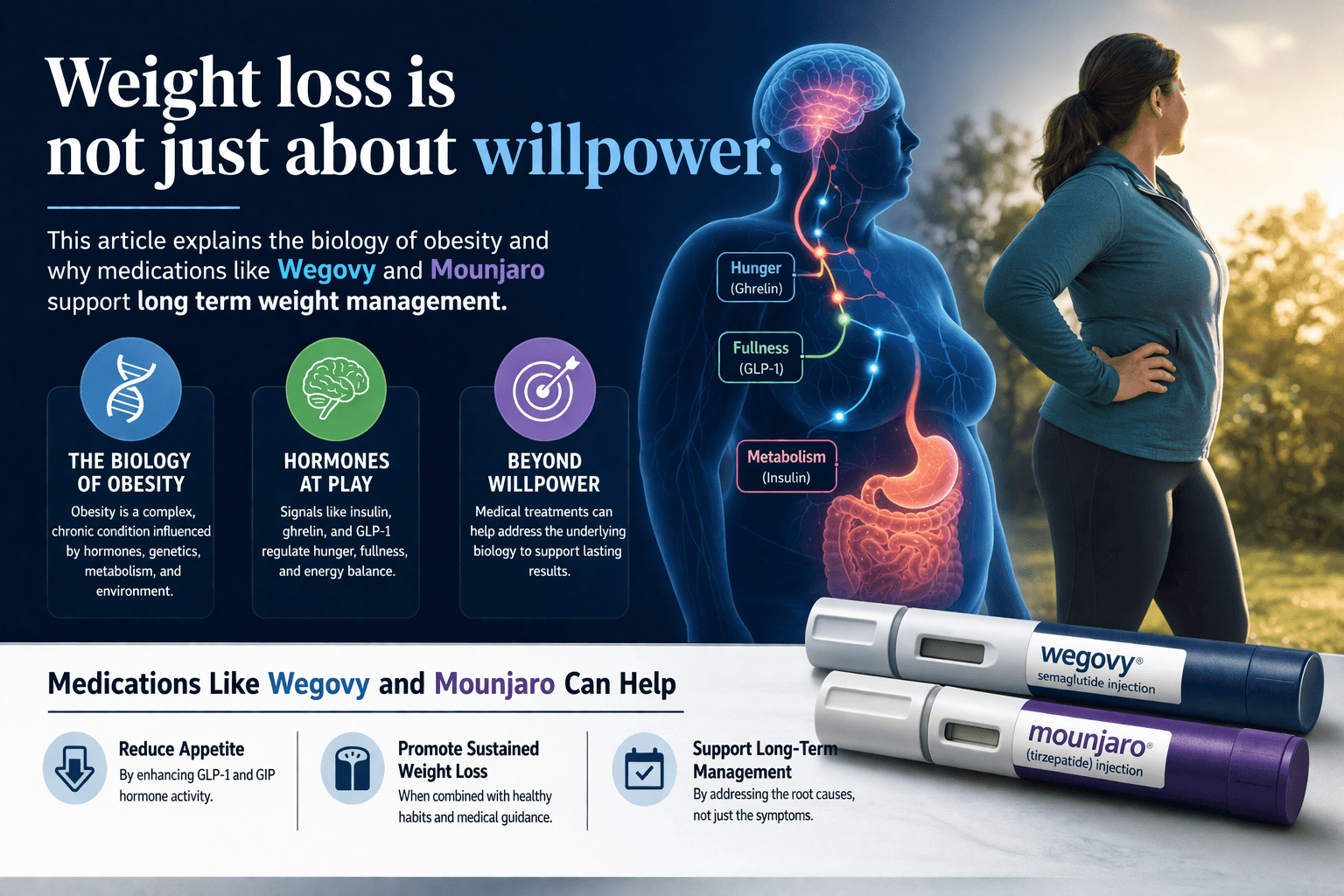
Weight loss is often described as a matter of willpower. Many people are told that success comes down to eating less and moving more. While these behaviours are important, this explanation does not reflect the full picture.
Obesity is now recognised as a complex medical condition influenced by biology, hormones, environment, and psychology. For many people, weight gain and difficulty losing weight are driven by factors beyond conscious control.
If you are exploring treatment options, it may help to first understand how weight loss medications work alongside these biological systems. See our guide How Weight Loss Medications Work: A Medical Overview.
The biology of weight regulation
The body has built in systems designed to maintain weight. Hormones regulate hunger, fullness, and energy use, helping to keep body weight within a certain range.
When weight is lost, these systems often respond by increasing hunger and reducing energy expenditure. This can make long term weight loss difficult, even with strong motivation and consistent effort.
These biological responses are not a lack of discipline. They are part of how the body works.
Why willpower alone is often not enough
Short term weight loss is possible through calorie restriction, but maintaining that loss is often more challenging. Increased hunger, cravings, and reduced fullness signals can make it difficult to sustain changes over time.
This is why many people experience cycles of weight loss and regain, despite continued effort.
How weight loss medication changes the picture
Medications such as Wegovy (semaglutide) and Mounjaro (tirzepatide) work by influencing the biological systems that regulate appetite.
They help reduce hunger, increase feelings of fullness, and support better control over food intake. For a more detailed explanation, see our article What Are GLP-1 Medications and Why Do They Help With Weight Loss.
Many people find that medication reduces the constant mental effort required to manage food, making it easier to follow a structured plan.
Reducing stigma and changing the conversation
Viewing obesity as a medical condition rather than a personal failing can help reduce stigma and support more effective treatment.
This approach encourages individuals to seek appropriate support, including medical treatment where suitable, rather than relying solely on self control.
Medication is a tool, not a replacement
Weight loss medication does not replace healthy behaviours. Nutrition, physical activity, sleep, and stress management remain important.
Instead, medication helps make these behaviours more achievable by addressing the biological drivers of hunger and appetite.
Who this approach may help
For individuals who have struggled with long term weight management despite sustained effort, medication may provide an additional level of support.
Suitability should always be assessed by a clinician. For more information, see our guide Who Is Suitable for Weight Loss Medication.
Looking ahead
Understanding obesity as a medical condition is changing how treatment is approached. New medications and ongoing research continue to improve the options available.
For a broader overview of current treatments and future developments, see our pillar guide Weight Loss Medication in the UK: A Patient-Centred Pillar Guide.
Further reading
• NICE guidance on obesity management
• NHS weight management services
• Research on long term weight regulation
Get weekly weight loss tips
Join our newsletter for provider updates, expert guidance, and exclusive offers — no spam.
Subscribe free