What Are GLP-1 Medications and Why Do They Help With Weight Loss?
GLP-1 medications such as Wegovy and Mounjaro support weight loss by regulating appetite and fullness. Learn how they work, what to expect, and how they fit into treatment.
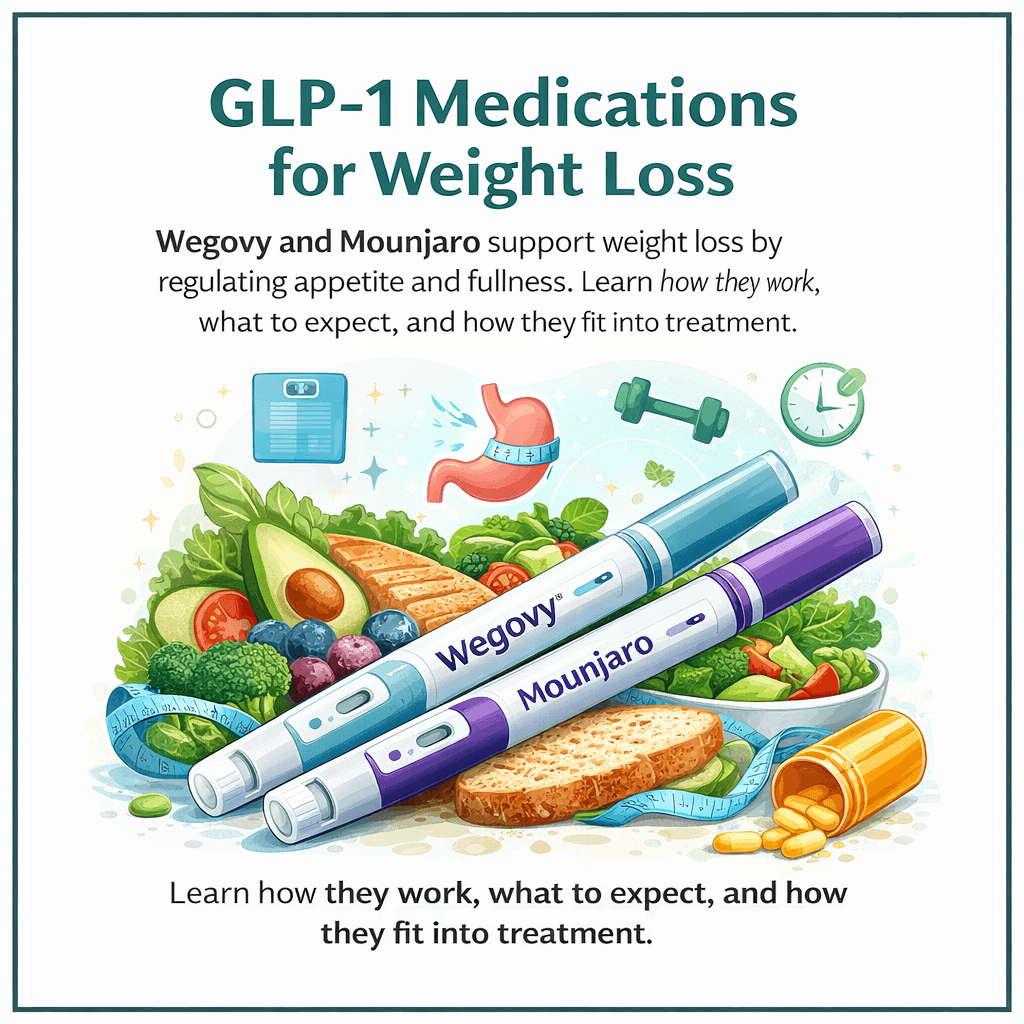
GLP-1 medications have become an important development in the medical treatment of obesity. Rather than relying on willpower alone, these treatments work with the body’s natural appetite and hormone systems to support weight loss in a more sustainable way.
If you are considering treatment with medications such as Wegovy (semaglutide) or Mounjaro (tirzepatide), understanding how they work can help you feel more informed and confident in your decision. For a broader introduction, see our overview How Weight Loss Medications Work: A Medical Overview.
What is GLP-1
GLP-1 stands for glucagon-like peptide-1. It is a hormone released in the gut after eating. It helps signal fullness, slows stomach emptying, and supports blood sugar regulation.
In many people living with obesity, these signals may be less effective, which can lead to increased hunger and difficulty maintaining weight loss.
How GLP-1 medications work
GLP-1 medications mimic the action of this hormone. They help reduce appetite, increase fullness, and support better control over food intake.
Wegovy works on the GLP-1 receptor to enhance satiety signals.
Mounjaro works on both GLP-1 and GIP receptors, which may offer additional appetite and metabolic benefits.
Many people experience a reduction in cravings and fewer intrusive thoughts about food, which can make long term changes feel more manageable.
Why this approach is different
Traditional dieting often increases hunger and makes long term weight loss difficult to sustain. GLP-1 medications help regulate the biological drivers of appetite, making dietary changes easier to maintain.
For a full overview of how these treatments fit into a broader plan, see our pillar guide Weight Loss Medication in the UK: A Patient-Centred Pillar Guide.
Expected results and timeline
Changes in appetite are often noticed within the first few weeks. Weight loss typically develops gradually over several months as treatment progresses.
If you would like to understand expected timelines in more detail, see our guide How Long Does It Take to See Results on Weight Loss Medication.
Side effects and safety
Common side effects include nausea, vomiting, diarrhoea, constipation, and reduced appetite. These are usually temporary and improve as the body adjusts.
We explore this in more detail in our guides Wegovy Side Effects: What’s Common, What’s Rare, and What to Expect and Mounjaro Side Effects and Tolerability: A Balanced View.
More serious side effects are uncommon but should always be discussed with a clinician. For a broader safety overview, see Are Weight Loss Medications Safe? Understanding the Evidence.
Emerging treatments
Retatrutide is an emerging medication that targets multiple hormone pathways. It is not yet approved for routine use in the UK but is being studied in clinical trials.
Medication as part of a wider plan
Weight loss medication works best alongside nutrition, physical activity, sleep, and stress management. It is one part of a broader, long term approach to health.
Further reading
• NICE guidance on obesity management
• NHS weight management services
• Clinical trials for semaglutide and tirzepatide
Get weekly weight loss tips
Join our newsletter for provider updates, expert guidance, and exclusive offers — no spam.
Subscribe free