How Stress Affects Weight Loss: Why Your Body Isn’t Responding
Struggling to lose weight despite doing everything right? Learn how stress affects weight loss, hormones, and habits — and what you can realistically do about it.
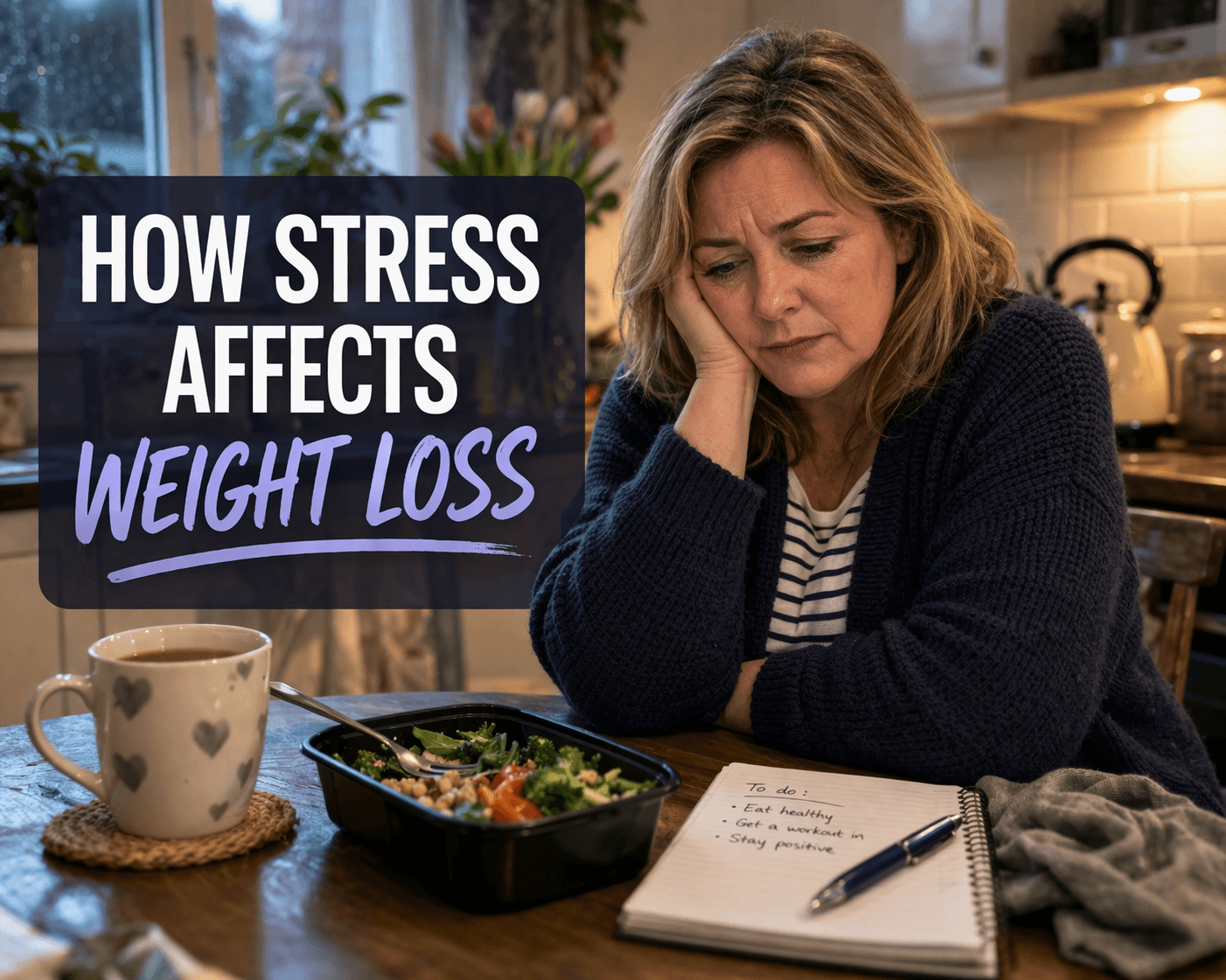
How Stress Affects Weight Loss: Why Your Body Isn’t Responding
Introduction
If you feel like you’re doing everything right but the weight still isn’t shifting, stress could be the missing piece.
In real life, this often looks like sticking to your meals during the week, then feeling completely drained by the evening and reaching for whatever is easiest. It’s frustrating, and it’s far more common than people realise.
Understanding how stress affects weight loss helps you make sense of what’s really going on — and why progress can feel so inconsistent.
How Stress Affects Weight Loss in the Body
When you’re under pressure, your body releases cortisol — often called the stress hormone.
What tends to happen is that short bursts of stress aren’t the issue. It’s the constant, low-level stress from everyday life that has the biggest impact.
Over time, this can:
- Increase your appetite, especially for high-calorie foods
- Encourage fat storage, particularly around the stomach
- Disrupt your sleep and recovery
This creates a situation where your body is working against you, even if your diet is relatively balanced.
Why Stress Affects Your Eating Habits
Stress doesn’t just change your hormones — it changes your behaviour.
A common mistake people make is assuming they lack discipline. In reality, stress affects your decision-making, energy levels, and cravings.
In real life, this often looks like:
- Skipping meals during busy days
- Craving sugar or takeaway foods in the evening
- Eating quickly without really noticing fullness
These patterns aren’t random — they’re your body responding to stress.
If this feels familiar, it links closely with Why Stress Leads to Emotional Eating and How to Break the Cycle.
How Does Stress Affect Weight Loss? (Featured Answer)
Stress affects weight loss by increasing cortisol levels, which can raise appetite, promote fat storage, and disrupt sleep. Over time, this makes it harder to stay consistent with healthy habits and maintain a calorie deficit, even when you feel like you’re trying your best.
The Overlooked Link Between Stress, Sleep and Energy
Sleep is often where things quietly start to unravel.
What tends to happen is that stress makes it harder to switch off at night. You might fall asleep, but not properly rest. The next day, you feel tired, hungrier, and less motivated.
This creates a cycle: Stress → poor sleep → increased hunger → lower energy
And when your energy is low, everything feels harder — from cooking to moving more.
You can explore this further in How Sleep and Stress Work Together to Affect Weight Loss.
Why Stress Management Matters More Than You Think
If stress isn’t addressed, it often leads to:
- Slower or stalled fat loss
- Increased cravings and emotional eating
- Reduced consistency
- Greater likelihood of regaining weight
In real life, sustainable weight loss isn’t about pushing harder. It’s about creating the right conditions for your body to respond.
Conclusion
Stress is often the quiet factor that gets overlooked.
Once you understand how stress affects weight loss, things begin to feel less confusing — and more manageable.
You don’t need to eliminate stress completely. But learning how to work with your body, rather than against it, can make a noticeable difference.
It’s worth asking yourself — are you trying to force progress, or support it?
Get weekly weight loss tips
Join our newsletter for provider updates, expert guidance, and exclusive offers — no spam.
Subscribe free