Why Sleep Could Be the Missing Link in Your Weight Loss
Struggling to lose weight despite doing everything right? Poor sleep could be the reason. Learn how sleep affects hunger, metabolism and how to improve it in just 7 days.
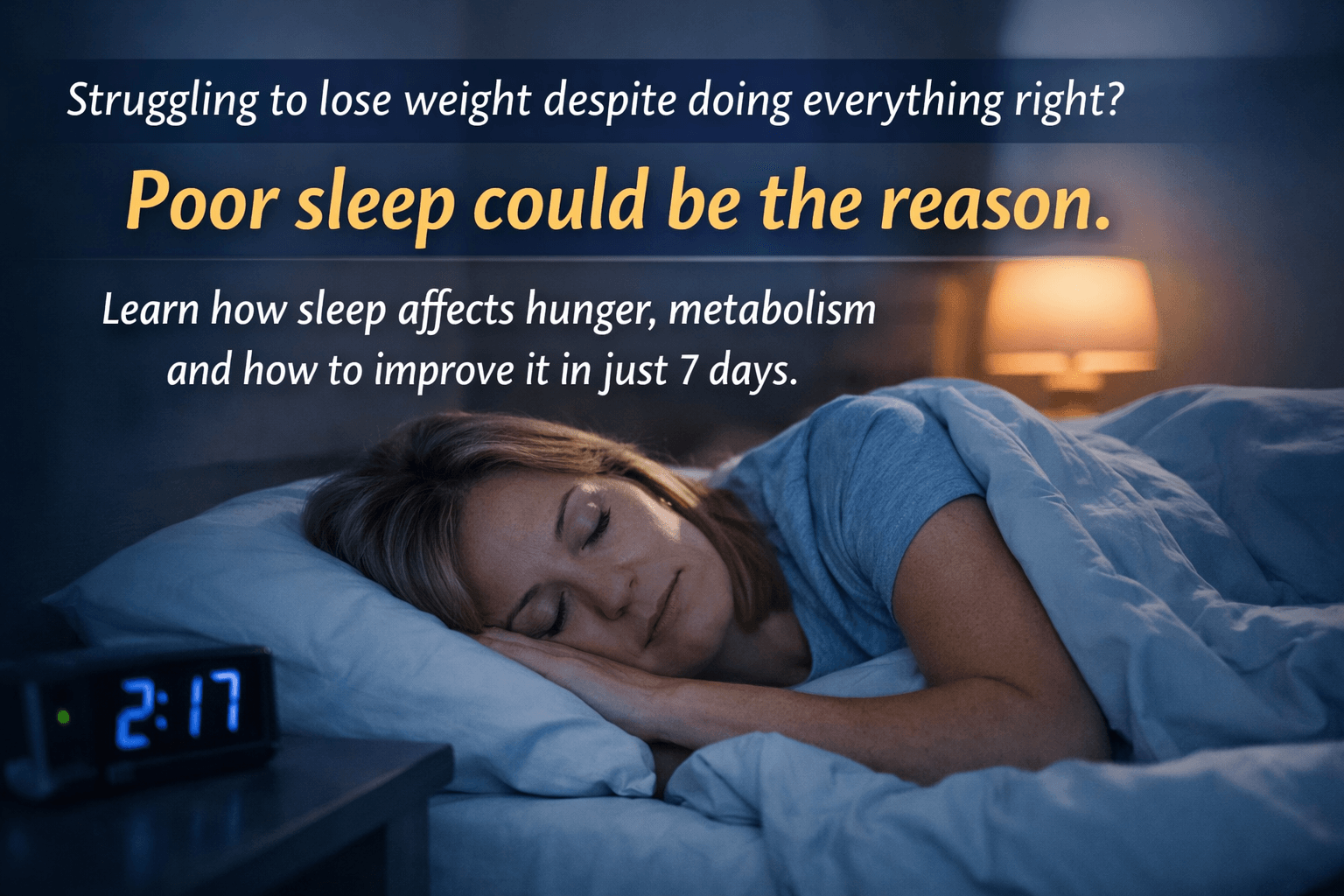
Why Sleep Could Be The Missing Link In Your Weight Loss
If you’ve ever felt like you’re doing everything right — eating well, moving more — yet the scales refuse to shift, you’re not alone.
In real life, this is where many people start to feel frustrated. And more often than not, there’s one factor quietly working against them: sleep.
Poor sleep doesn’t just leave you feeling tired. It can increase hunger, slow your metabolism, and make weight loss feel far harder than it should be.
The good news is that once you understand the link, small changes can make a noticeable difference.
Why Sleep Matters More Than You Think
Sleep is not just rest. It’s when your body resets the systems that control appetite, energy and fat storage.
When sleep is poor or inconsistent, what tends to happen is:
- you feel hungrier the next day
- cravings for sugary or high-calorie foods increase
- energy levels drop, making movement feel harder
- the body becomes more likely to store fat
In real life, this often looks like reaching for biscuits mid-afternoon or skipping a walk because you feel exhausted.
A common mistake people make is blaming themselves, when in reality, the body is simply reacting to fatigue.
The Hormone Problem Most People Don’t See
Sleep directly affects two key hunger hormones.
Ghrelin – increases hunger.
Leptin – tells your brain you are full.
When you don’t sleep well, ghrelin rises and leptin drops. This means you can feel hungry even after eating enough.
What tends to happen is:
- snacking becomes more frequent
- portion sizes slowly increase
- cravings feel much harder to ignore
If this sounds familiar, you may want to read my guide on How Poor Sleep Triggers Cravings and Overeating .
Sleep and Metabolism: The Hidden Slowdown
Sleep also affects how your body uses energy.
When you’re sleep-deprived, your body becomes less efficient at managing blood sugar. This can lead to more calories being stored as fat rather than used for energy.
Over time, this may result in:
- slower metabolism
- reduced energy levels
- difficulty maintaining consistency
If you’d like to understand this further, see How Sleep Affects Metabolism and Fat Storage .
What This Looks Like in Everyday Life
Let’s be honest — most people aren’t struggling with sleep for no reason.
In the UK, common issues include:
- scrolling on phones late at night
- stress from work or finances
- irregular routines or busy family life
- alcohol disrupting sleep quality
A pattern I often see is someone eating well during the day, then struggling in the evening due to tiredness and cravings.
How to Start Improving Sleep (Without Overcomplicating It)
You don’t need a perfect routine overnight. Small, consistent changes work best.
Start with:
- going to bed and waking up at similar times
- reducing screen time before bed
- keeping your bedroom cool and dark
- avoiding caffeine later in the day
If evenings are where things tend to slip, have a look at Why Late Nights Lead to Overeating .
The Key Takeaway
If weight loss has felt harder than it should be, it’s not always about eating less or exercising more.
Sometimes, it’s about giving your body the right conditions — and sleep is a huge part of that.
Start by improving your sleep, even slightly, and you may find everything else becomes easier.
Have you noticed your eating habits change after a poor night’s sleep? It’s often more connected than people realise.
Get weekly weight loss tips
Join our newsletter for provider updates, expert guidance, and exclusive offers — no spam.
Subscribe free