How Sleep Affects Metabolism and Fat Storage
Struggling to lose weight even when eating well? Poor sleep can slow your metabolism and increase fat storage without you realising.
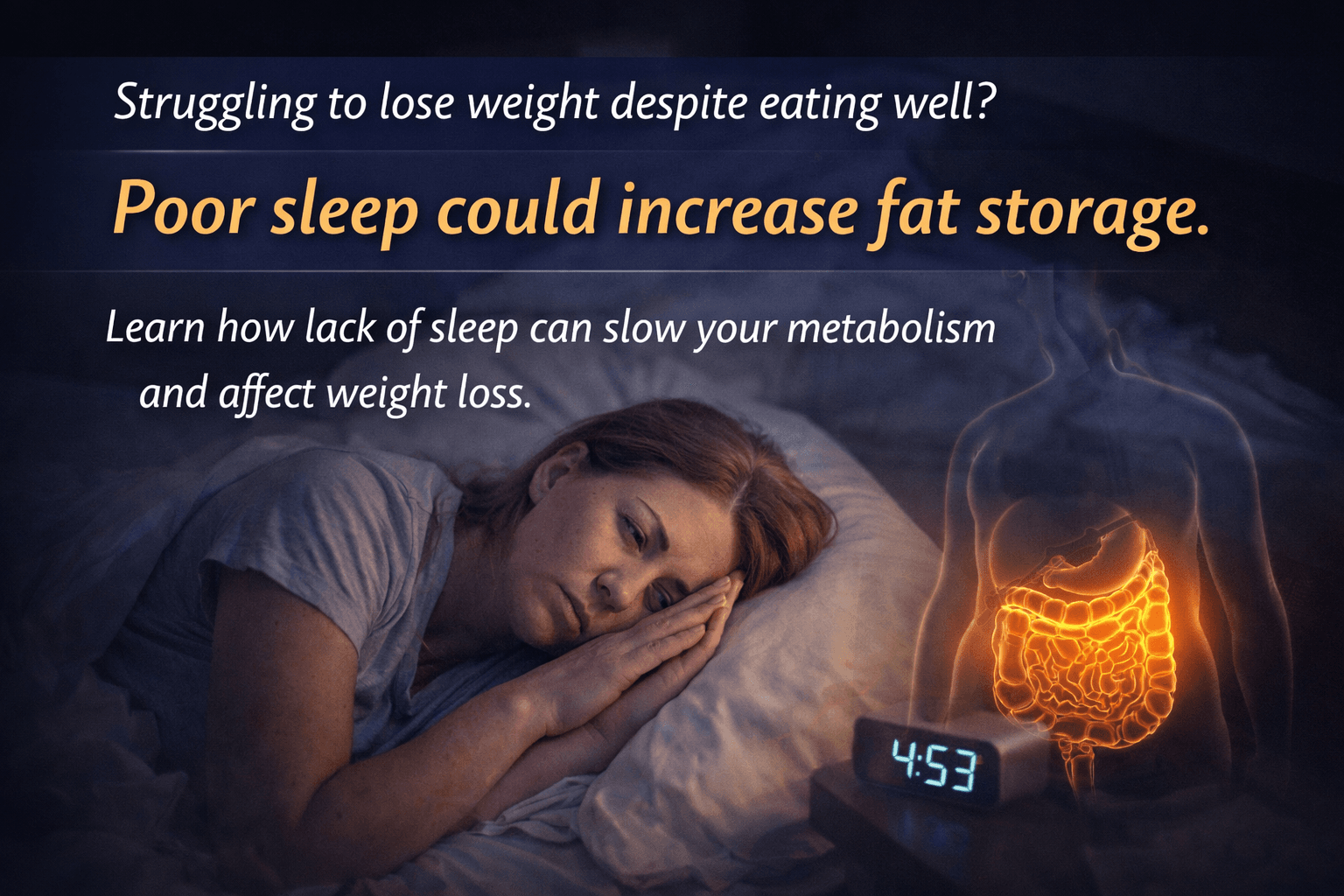
How Sleep Affects Metabolism and Fat Storage
If you’ve ever felt like you’re eating well but still not losing weight, it can be incredibly frustrating.
In real life, this is often where people start cutting calories further or exercising more — but still see very little change.
What’s often overlooked is how sleep directly affects your metabolism and how your body stores fat.
Even small disruptions in sleep can quietly slow things down behind the scenes.
Why Your Metabolism Depends on Sleep
Your metabolism is how your body converts food into energy.
When you’re well rested, this process works efficiently. But when sleep is poor, your body becomes less effective at using energy properly.
What tends to happen is:
- your body burns fewer calories at rest
- energy levels drop throughout the day
- your body becomes more likely to conserve energy
In real life, this often looks like feeling sluggish, moving less, and struggling to stay consistent.
A common mistake people make is assuming their metabolism is “naturally slow”, when in many cases, sleep is playing a major role.
How Poor Sleep Increases Fat Storage
Sleep also affects how your body handles blood sugar.
When you’re sleep-deprived, your body becomes less sensitive to insulin — the hormone that helps regulate blood sugar levels.
When this happens, excess calories are more likely to be stored as fat rather than used for energy.
Over time, this can lead to:
- increased fat storage
- reduced fat burning
- more difficulty losing weight
If you haven’t already, it’s worth reading Why Sleep Could Be the Missing Link in Your Weight Loss to understand how this fits into the bigger picture.
Why This Feels So Frustrating
One of the hardest parts is that this process is not always obvious.
You might feel like you’re doing everything right, yet progress is slow or inconsistent.
What tends to happen is:
- you stay consistent but see little change
- motivation starts to drop
- you begin to question your approach
In real life, this is where many people give up — not realising their body simply needs better recovery.
How Sleep Supports Fat Loss
When sleep improves, the body becomes much more efficient.
You may start to notice:
- more stable energy levels
- better results from the same routine
- improved consistency
Sleep helps your body return to a state where it can burn energy properly rather than store it.
If cravings are also an issue, you may find it helpful to read How Poor Sleep Triggers Cravings and Overeating.
Simple Changes That Make a Difference
You don’t need to overhaul everything at once.
Start with:
- keeping a regular sleep schedule
- avoiding late meals close to bedtime
- reducing light exposure before bed
- creating a calm wind-down routine
These small steps can gradually improve how your body processes energy.
The Key Takeaway
If weight loss feels slower than expected, it may not be about effort — it may be about recovery.
Sleep plays a direct role in how your body burns calories and stores fat.
By improving your sleep, you give your body a much better chance to work with you, rather than against you.
Have you noticed your energy or progress dip after a few poor nights of sleep? It’s often more connected than it first appears.
Get weekly weight loss tips
Join our newsletter for provider updates, expert guidance, and exclusive offers — no spam.
Subscribe free