How Poor Sleep Triggers Cravings and Overeating
Struggling with cravings and late-night snacking? Poor sleep may be increasing your hunger and making weight loss harder than it should be.
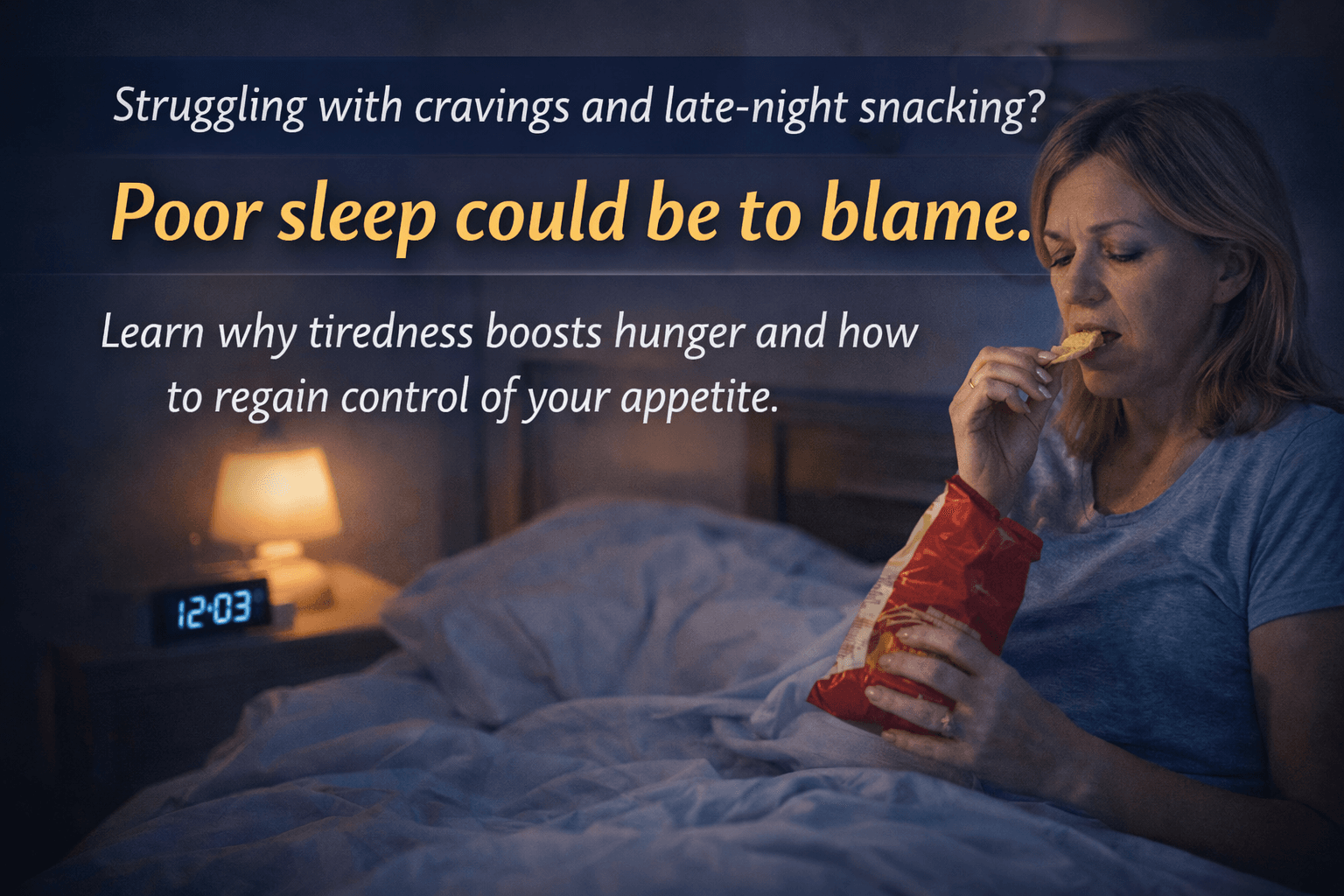
How Poor Sleep Triggers Cravings and Overeating
If you’ve ever found yourself standing in the kitchen late at night, reaching for something sweet or salty, you’re certainly not alone.
In real life, this is one of the most common struggles people face when trying to lose weight — and it often has very little to do with willpower.
More often than not, it comes down to one thing: poor sleep.
When your body is tired, it starts to push you towards quick energy sources, making cravings feel stronger and harder to ignore.
Why Tiredness Makes You Feel Hungrier
When you don’t get enough sleep, your body looks for ways to compensate for the lack of energy.
What tends to happen is:
- you feel hungrier throughout the day
- you feel less satisfied after meals
- you start thinking about food more often
In real life, this might look like needing a snack mid-morning, even after breakfast, or feeling like lunch “hasn’t quite hit the spot”.
This is not a lack of discipline — it’s your body trying to keep you going.
Why Cravings Get Stronger
Sleep deprivation doesn’t just increase hunger — it changes what you want to eat.
When you’re tired, your brain becomes more sensitive to high-calorie foods, particularly:
- sugary snacks
- crisps and processed foods
- refined carbohydrates
At the same time, your ability to make balanced decisions weakens.
A common mistake people make is assuming they “just need more willpower”, when in reality, their brain is working against them.
If you haven’t already, it’s worth reading Why Sleep Could Be the Missing Link in Your Weight Loss , as this is where the bigger picture starts to make sense.
The Late Night Eating Pattern
One of the biggest issues linked to poor sleep is evening eating.
When you stay up later, you create more opportunities to snack — often when you’re most tired and least in control.
What tends to happen is:
- you eat out of habit rather than hunger
- portions become less controlled
- you choose quick, comforting foods
In real life, this often looks like eating while watching television or scrolling on your phone, without really noticing how much you’ve had.
Over time, these extra calories can quietly slow down your progress.
Why This Makes Weight Loss Feel Harder
When cravings, hunger and tiredness all combine, weight loss can feel like an uphill struggle.
You may find yourself:
- feeling constantly hungry
- struggling to stick to your usual routine
- losing motivation to stay consistent
This is why improving sleep can often make everything else feel easier.
If you want to understand the science behind this further, take a look at How Sleep Affects Metabolism and Fat Storage .
What You Can Do to Regain Control
The aim isn’t perfection — it’s making things more manageable.
Start by focusing on:
- getting to bed slightly earlier where possible
- eating regular, balanced meals during the day
- reducing late-night screen time
- creating a simple evening routine
Even small changes can reduce cravings and help you feel more in control.
The Key Takeaway
If you’re struggling with cravings or overeating, it may not be about willpower at all.
Often, it’s your body responding to tiredness and trying to keep your energy levels up.
By improving your sleep, you can reduce cravings, feel more satisfied after meals, and make weight loss feel far more manageable.
Have you noticed your cravings are worse after a poor night’s sleep? It’s a pattern many people begin to recognise once they look for it.
Get weekly weight loss tips
Join our newsletter for provider updates, expert guidance, and exclusive offers — no spam.
Subscribe free