Protein on Weight Loss Medication: How Much You Need When Appetite Is Low
When Wegovy or Mounjaro shrinks your appetite, eating enough protein gets harder. Here is how much UK guidance suggests and how to fit it into smaller meals.
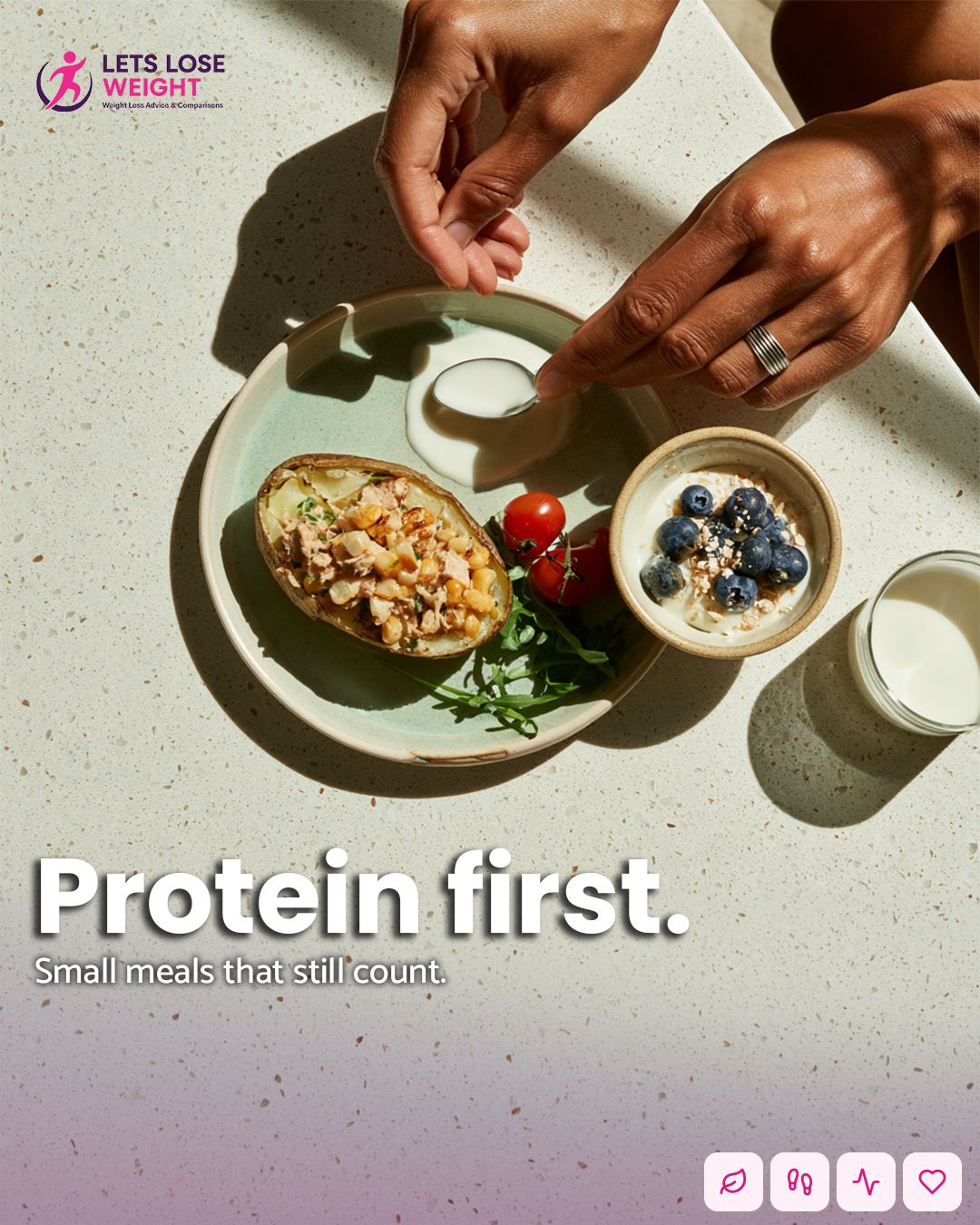
Wegovy (semaglutide) and Mounjaro (tirzepatide) make it much easier to eat less. The flip side is that a meal you used to finish without thinking can feel like too much after a few forkfuls, and protein is often what gets left on the plate.
This guide covers how much protein current UK guidance suggests while you are on weight loss medication, why it matters more at this stage, and practical ways to fit it into smaller meals without forcing food down.
The short answer
NHS guidance from Guy's and St Thomas' suggests most adults on weight loss medicines aim for 80g to 100g of protein a day, alongside strength exercise twice a week. With a smaller appetite, the practical answer is to eat protein first, include some at every meal and snack, and choose foods that pack plenty into a small portion.
Why protein matters more on GLP-1 medication
When you eat less for a sustained period, your body loses some lean tissue, including muscle, as well as fat. In the body composition substudy of the STEP 1 trial, people taking semaglutide lost lean mass as well as fat mass, although lean mass made up a larger share of their body by the end because fat fell further.
This matters more on GLP-1 medication because appetite can drop sharply, so total food intake, and protein with it, can fall well below what you are used to. Protein, combined with strength-based activity, is one of the main ways to hold on to muscle while you lose weight. The wider case for protein is covered in protein and weight loss; this article focuses on reaching a target when you simply cannot eat much.
How much protein you need on Wegovy or Mounjaro
The UK Reference Nutrient Intake for adults is 0.75g of protein per kilogram of body weight per day, set by the Department of Health in 1991. It is designed to cover basic needs for most people, not to protect muscle during active weight loss.
For people taking weight loss medicines, Guy's and St Thomas' NHS Foundation Trust advises 80g to 100g of protein a day for the general population, paired with strength exercise twice a week (guidance checked October 2026). Other UK sources quote lower ranges, such as 60g to 80g, and research-based targets vary, so treat these as general figures rather than a personal prescription.
If you have kidney disease or diabetes, are pregnant or are under 18, speak to your GP or a registered dietitian before increasing protein. The same applies if your appetite is very low.
High-protein foods for a small appetite
A simple way to do this is to build each meal around a palm-sized portion of protein and eat that part first, while you still have room. Three smaller meals plus one or two protein-based snacks are usually easier to manage than one large dinner.
Protein-dense foods give you more per mouthful. Approximate figures for everyday UK foods:
| Food | Portion | Protein (approx.) |
|---|---|---|
| Grilled chicken breast | 100g (about a palm) | 32g |
| Tinned tuna in brine | 100g | 25g |
| Grilled salmon | 100g fillet | 25g |
| Quorn mince | 100g | 14g |
| Greek-style yoghurt | 150g pot | 14g |
| Eggs | 2 medium | 12–14g |
| Baked beans | Half a can (200g) | 10g |
| Cottage cheese | 100g | 9g |
| Lentils or chickpeas, drained | Half a can (120g) | 9g |
| Milk | 200ml glass | 7g |
In practice, this looks like:
- Breakfast: Greek-style yoghurt with berries and a spoonful of porridge oats, or a boiled egg with a slice of wholemeal toast
- Lunch: half a jacket potato with tuna and sweetcorn, or a bowl of lentil soup
- Dinner: a small salmon fillet or chicken breast with vegetables and a few spoonfuls of rice, or a Quorn mince chilli with beans
- Snacks: cottage cheese on an oatcake, a small pot of yoghurt or a glass of milk
When even small meals feel like too much, cooler and softer foods such as yoghurt, cottage cheese, scrambled egg or a milky drink are often easier to manage. Guy's and St Thomas' also notes that protein shakes can help if food alone is not getting you there, though they are a top-up rather than a replacement for meals.
Common mistakes
- Filling up on low-protein foods first. Crackers, toast or crisps eaten before a meal take up the little room you have.
- Skipping meals because you are not hungry. Long gaps make a daily total hard to reach; small, regular amounts add up.
- Relying on one big portion. Spreading protein across the day is more realistic than trying to eat 40g in one sitting.
- Dropping plant foods. Beans, lentils and wholegrains bring fibre as well as protein, which helps with constipation, one of the more common side effects.
- Skipping strength work. Protein does more for muscle when paired with resistance exercise. Exercising on Wegovy or Mounjaro covers how to start safely.
When to get advice
Speak to your GP or a registered dietitian if you are regularly managing only a few mouthfuls at meals, feel weak or dizzy, or are losing weight faster than expected. If nausea, vomiting or other side effects make eating difficult for more than a few days, raise it with your prescriber rather than pushing through.
The bottom line
Weight loss medication makes eating less easier, but protein can quietly fall too far. UK NHS guidance points to around 80g to 100g a day for most adults, with strength exercise twice a week. Prioritise protein at each meal, choose dense foods that suit a small appetite, and get personal advice if you have a health condition or are struggling to eat. This sits within the wider approach in our UK guide to nutrition for sustainable weight loss.
Sources and further reading
- Guy's and St Thomas' NHS Foundation Trust: Lifestyle advice for people taking weight loss medicines, Food and nutrition
- British Nutrition Foundation: Protein in the diet (2021)
- British Nutrition Foundation: Eating well while taking weight loss medications
- University Hospitals Sussex NHS Foundation Trust: Protein fact sheet
- Wilding JPH et al. Once-weekly semaglutide in adults with overweight or obesity. New England Journal of Medicine, 2021 (STEP 1)
- Department of Health. Dietary Reference Values for Food Energy and Nutrients for the United Kingdom, 1991
Related reading from the Health Hub
- How to build high-protein meals
- What to eat on GLP-1 medication
- Smart snacking for weight loss
- Mounjaro side effects and tolerability
This article is for general information only and does not replace individual advice. Speak to your GP, a registered dietitian or your prescriber before making significant changes to your diet, especially if you have a medical condition or take weight loss medication.
Get weekly weight loss tips
Join our newsletter for provider updates, expert guidance, and exclusive offers — no spam.
Subscribe free