Building a Sustainable Eating Routine on Weight Loss Medication: Habits That Last
Weight loss medication quietens appetite, but habits are what last. How to build a simple weekly eating routine on Wegovy or Mounjaro that still works if treatment ends.
Weight loss medication can make eating feel almost effortless at first. Hunger is quieter, portions shrink on their own and the usual evening grazing fades. The risk is that eating becomes unplanned: skipped meals, whatever is in the cupboard, and few habits in place for the day appetite returns.
This guide is about using the time on Wegovy (semaglutide) or Mounjaro (tirzepatide) to build a routine that suits your life now and still works later. It covers why routine matters, a simple weekly structure, and the habits most worth practising.
The short answer
A sustainable routine on weight loss medication means regular meals at roughly the same times, each built around protein, vegetables and fibre, with a little weekly planning so good options are always to hand. Treat the medication as support for these habits rather than a replacement for them, because the habits are what carry on if treatment stops.
Why routine matters more on medication
Appetite is usually what prompts people to eat. When medication turns that signal down, it becomes easy to go long stretches without food and then eat whatever is quickest. This matters more on GLP-1 medication because irregular, low intake makes it harder to get enough protein, fibre and nutrients, and leaves you without practised habits for later.
The evidence on stopping treatment underlines the point. In an extension of the STEP 1 trial, people who stopped semaglutide regained about two thirds of the weight they had lost within a year (Wilding et al., 2022). NICE guidance on overweight and obesity, published in 2025, describes obesity as a long-term condition that needs ongoing support. Medication can be part of that support, but the eating patterns you build are the part you keep. What happens when treatment ends is covered in what happens when you stop.
A simple weekly structure
A routine does not need to be strict. It needs to be predictable enough that eating well happens without much thought.
In practice, this looks like:
- Regular anchors. Three meals at roughly the same times each day, plus a planned snack if there is a long gap. Whether you eat earlier or later matters less than consistency; meal timing and weight loss explains what the evidence shows.
- A familiar plate. Aim for roughly a quarter protein, a quarter starchy food such as wholemeal pasta, rice or potatoes with skins, and half vegetables or salad, following the proportions in the Eatwell Guide.
- A short list of go-to meals. Five or six simple dinners you can cook without a recipe makes shopping and decisions much easier.
- One planning moment a week. Ten minutes on a Sunday to check the week ahead, choose meals and write a shopping list.
Habits worth building now
These are the habits that make the biggest difference over time, and the easiest to practise while appetite is low.
Plan and shop with a list
Shopping from a list built around your go-to meals reduces impulse buys and food waste. Keeping a few staples in stock means a balanced meal is always possible: tinned beans and lentils, tinned fish, eggs, frozen vegetables, porridge oats, wholemeal wraps and natural yoghurt.
Batch cook smaller portions
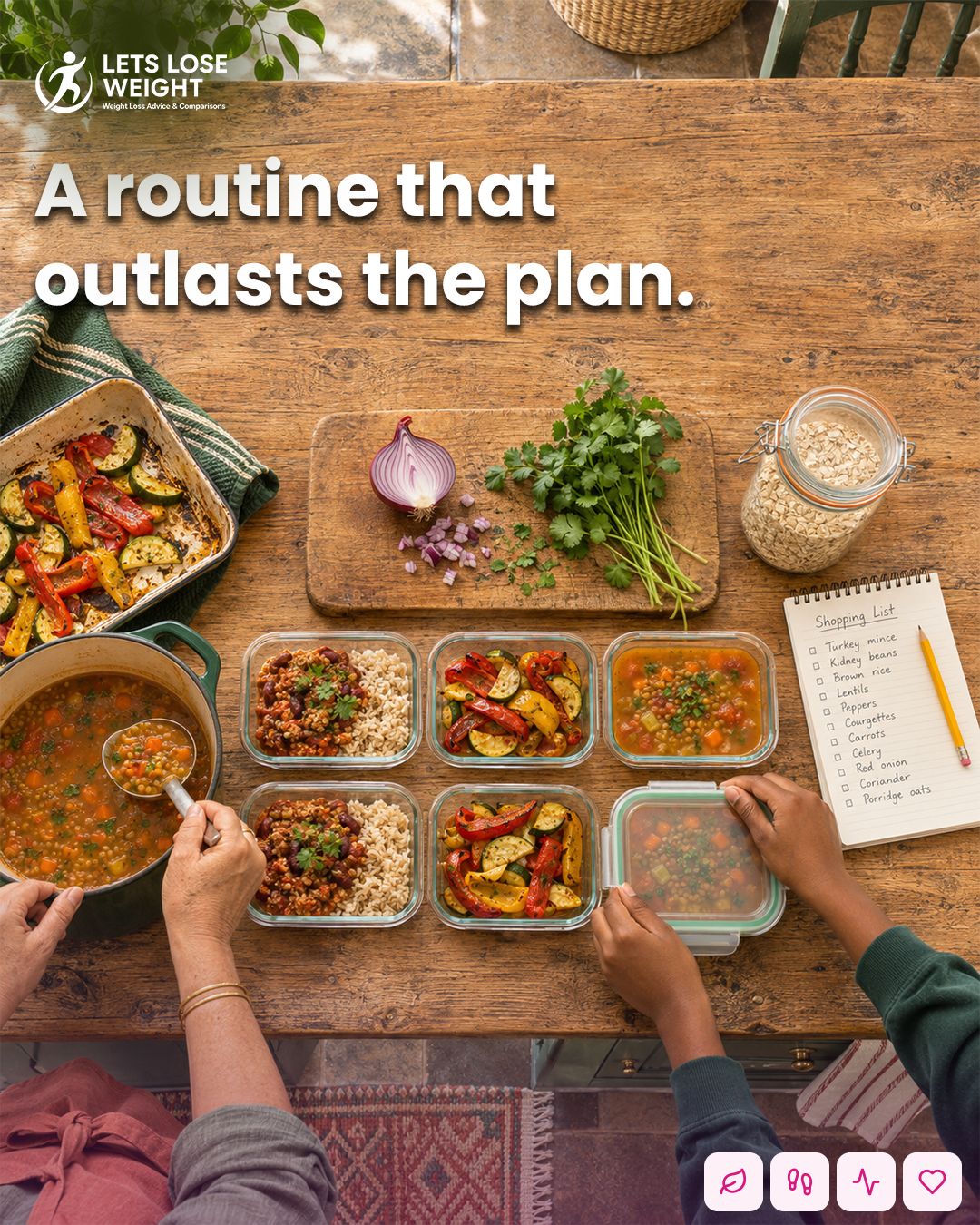
Cooking once and eating twice saves time and decisions. A pot of chilli with kidney beans, a vegetable and lentil soup or a tray of roasted vegetables and chicken thighs can be portioned into small containers for the fridge or freezer. Smaller portions suit a reduced appetite now and become familiar portion sizes later.
Notice fullness
Medication makes fullness signals stronger, which is a useful time to learn what comfortably full feels like. Eating slowly, putting your fork down between mouthfuls and pausing halfway through a meal are habits that still help once those signals return to normal.
Build in the rest of life
Sleep, stress and movement all affect appetite and food choices. Short sleep, for example, is linked with stronger cravings. Regular activity, including some strength-based exercise, supports both weight and wellbeing.
Common mistakes
- Letting the medication decide everything. Skipping meals because you are not hungry leaves no routine to fall back on later.
- Following a rigid plan. Strict rules tend to fail at the first birthday or busy week. Aim for a pattern that bends.
- Never practising flexible eating. Meals out, takeaways and family occasions are part of life; build them into the week rather than avoiding them.
- Waiting until treatment ends. Habits are easiest to build while appetite is quieter, not after it has returned.
When to get advice
A registered dietitian can help you build a routine around your health, budget and culture, and is especially worth seeing if you have diabetes, kidney disease or another condition, are pregnant or are under 18. Raise persistent side effects with your prescriber, and talk to them before stopping treatment. If thoughts about food, eating or your body are causing you distress, Beat, the UK eating disorder charity, and your GP can help.
The bottom line
Weight loss medication works best alongside a routine you can keep. Eat at regular times, build each meal around protein, vegetables and fibre, plan a little each week, and practise noticing fullness while your appetite is quieter. These habits are what remain if treatment ends. For the wider approach to eating well, see the nutrition for sustainable weight loss guide.
Sources and further reading
- Wilding JPH et al. (2022): Weight regain and cardiometabolic effects after withdrawal of semaglutide: the STEP 1 trial extension, Diabetes, Obesity and Metabolism
- NICE guideline NG246 (2025, updated 2026): Overweight and obesity management
- Food Standards Agency and Public Health England: The Eatwell Guide
- British Dietetic Association: Medications for obesity, patient resource (published alongside NICE technology appraisal TA875)
Related reading from the Health Hub
- What a balanced plate looks like
- Smart snacking: what to eat between meals
- Weight loss medication vs willpower
- How poor sleep triggers cravings and overeating
This article is for general information only and does not replace individual advice. Speak to your GP, a registered dietitian or your prescriber before making significant changes to your diet, especially if you have a medical condition or take weight loss medication.
Get weekly weight loss tips
Join our newsletter for provider updates, expert guidance, and exclusive offers — no spam.
Subscribe free